
Signs Your Cutter Valve Spindle Needs Replacing
Gas equipment rarely just quits on you out of nowhere. It's usually a slow build-up, a bit of stiffness one week, a flame that's not quite behaving right the next, until eventually it's either not working properly or it's flat out unsafe to keep using. The spindle tucked inside the cutter valve is one of those parts that takes on most of that wear without anyone really noticing. It's tiny, it's easy to forget it even exists, and yet it's basically the one thing standing between controlled gas flow and a genuine problem.
If you're running a workshop, welding on a regular basis, or just keeping your own gas cutting gear in working order, here's what's actually worth watching for before that spindle turns into something more than a minor annoyance.
What This Little Part Is Even Doing
The spindle controls how the valve opens and closes, essentially regulating how much gas is getting through at any given moment. Every time you adjust the flame, you're leaning on that spindle to move smoothly and seal tight when you need it to. Nobody thinks about it much when it's working, which honestly makes sense. It's only once it starts to wear out that people realize just how much they were relying on it to do its job correctly, every single time they touched that valve.
And because this is gas equipment, not some household tap fitting, a worn-out spindle isn't just a minor inconvenience you can shrug off. Left alone long enough, it turns into an actual safety concern.
The Valve Feels Stiff or Won't Turn Like It Used To
This tends to be the first thing anyone notices, and it's also the easiest thing to dismiss as "just getting old." If the handle's harder to turn than it should be, feels gritty under your hand, or just doesn't move the way it once did, that's your spindle trying to tell you something's shifted internally. Could be debris buildup. Could be actual wear on the threading. Either way, a valve that fights you every time you go to adjust it isn't something worth pushing through week after week.
The Flame Won't Hold Steady
If your cutter's flame is flickering, surging, or acting unpredictable even after you've ruled out the obvious stuff like gas supply and tip condition, take a look at the spindle. Once it wears down, the valve loses some of its ability to regulate flow precisely, and that precision is exactly what you need for clean, safe cuts. It's tempting to blame other parts of the setup first, which is fair, but if everything else checks out and the flame's still off, this is where to look next.
You Smell Gas or Hear a Hiss Near the Valve
This one doesn't get a "wait and see" pass. Ever. Any gas smell around the valve area, or a hissing sound when the thing's supposedly shut, means something isn't sealing right, and the spindle is one of the usual suspects. A worn spindle can stop the valve from closing all the way, even when it looks and feels shut from the outside. If this happens, cut the gas supply at the source right away. Don't wait until the job's finished for the day.
Visible Wear or Corrosion on the Spindle
Pull it out for a look every once in a while, especially if the equipment gets regular use, and actually check the condition of the metal. Pitting, corrosion, worn grooves, any damage to the threading, these are all pretty clear signs it's nearing the end of its life. This shows up faster on cheaper spindles that skipped out on proper brass construction, which is really the whole point of why material quality matters this much for gas parts specifically.
The Valve Just Won't Fully Shut Off
Related to the leak problem above, but it deserves its own mention. If you're closing the valve all the way and gas is still trickling through, even a tiny bit, that means the spindle isn't seating properly anymore. That's not a situation where you keep an eye on it and see how it goes. A valve that can't fully close defeats the entire purpose of having one, and it needs sorting out before the equipment's used again.
You're Fiddling With It a Lot More Than You Used To
If you notice yourself constantly adjusting the valve just to keep the flame steady, more than you remember doing a year ago, that's often the spindle's precision slowly slipping. It's easy to just adapt to this without really clocking it as a problem, especially since it tends to creep up gradually over months. But if you stop and think back to when the valve used to hold a setting reliably, and it clearly doesn't anymore, that's worth paying attention to.
Why It's Not Worth Putting Off
With a lot of equipment, a worn part just means you're dealing with reduced performance until you get around to it. Gas cutting gear doesn't really give you that same room. A worn spindle hits both the accuracy of your work and, more importantly, the safety of the whole setup. Swapping it out is quick and cheap. Not swapping it out, and running into an actual leak or valve failure mid-job, is an entirely different situation, one that risks damaging equipment at best and hurting someone at worst.
That's exactly why a lot of workshops just keep a spare spindle or two on hand instead of waiting for one to fail mid-project. It's a small part, sure, but it's not one worth being lazy about.
Finding a Replacement Worth Trusting
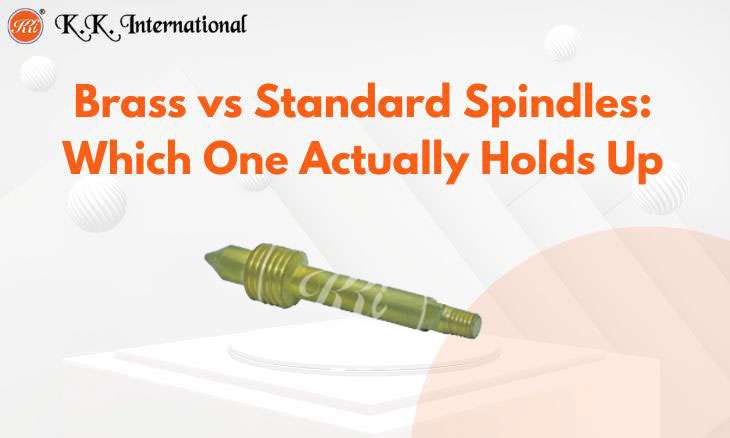
Not every spindle out there is built to the same level, and that difference shows up pretty fast once one's actually in use. A properly made brass spindle, like the Cutter Valve Spindle from KK International, is built with the demands of gas cutting systems in mind, durable, corrosion-resistant, and designed to hold a tight, leak-proof seal for the long haul. It fits standard 1/4" gas pipes and works across a wide range of cutter brands, so replacing a worn one doesn't turn into a hunt for some obscure part nobody stocks.
If your setup's showing any of the signs above, it's worth sorting out sooner rather than later, both for the quality of your work and just basic safety around gas equipment.
Need a solid replacement spindle for your setup? Get in touch with the KK International team, they'll help make sure you're getting the right fit for what you're running.


